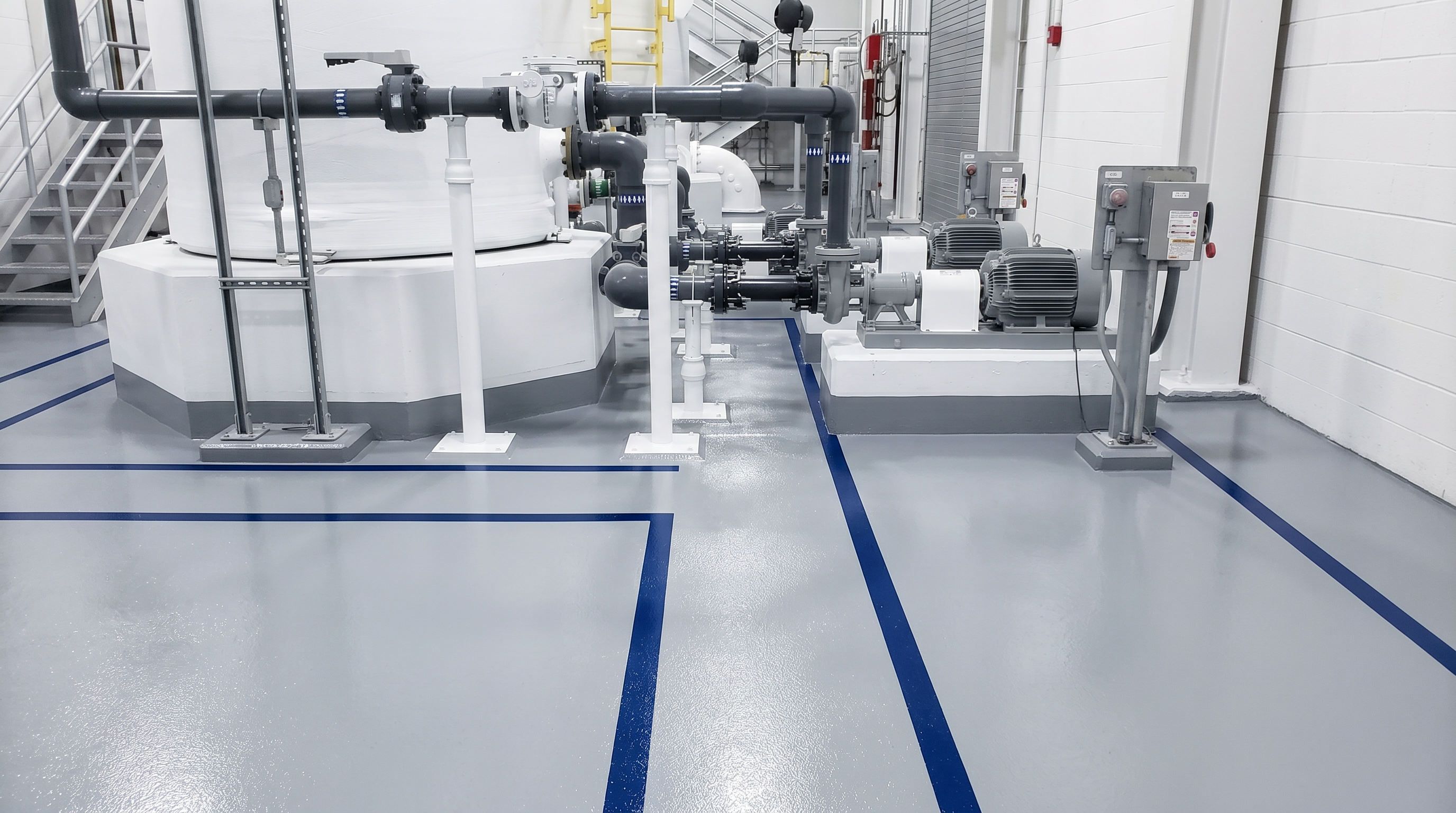
Industrial and commercial facilities that regularly handle chemicals, oils, solvents, fuels and aggressive cleaning agents require flooring systems capable of withstanding harsh operating conditions. While untreated concrete may appear strong, it is naturally porous and vulnerable to chemical attack. Over time, liquids penetrate the surface, causing staining, weakening the concrete structure and creating expensive maintenance problems that disrupt operations.
Chemical-resistant epoxy flooring provides a highly durable, seamless protective barrier that shields concrete from chemical exposure while improving workplace safety, hygiene and operational efficiency. Designed specifically for demanding industrial environments, epoxy flooring helps businesses extend the lifespan of their facilities while reducing maintenance costs and creating a cleaner, more professional workplace.
Whether operating a manufacturing plant, food processing facility, pharmaceutical factory, engineering workshop or chemical storage area, investing in chemical-resistant epoxy flooring protects one of the most valuable assets within your building—the concrete floor.
Why Industrial Floors Need Chemical Protection
Concrete naturally contains microscopic pores that readily absorb liquids. Oils, acids, alkalis, solvents and fuels slowly penetrate the surface, causing permanent staining and gradual deterioration. As chemicals migrate deeper into the concrete, they weaken the surface and increase the likelihood of cracking, dusting and structural damage.
Once deterioration begins, businesses often face ongoing repairs, production interruptions and increasing maintenance costs. In many industries, damaged flooring also creates safety hazards and hygiene concerns that can affect regulatory compliance.
Chemical-resistant epoxy flooring seals the concrete surface completely, preventing contaminants from penetrating the floor while providing long-term protection against everyday industrial exposure.
What is Chemical-Resistant Epoxy Flooring?
Chemical-resistant epoxy flooring is a high-performance resin flooring system specifically formulated to resist attack from a wide range of industrial chemicals. Unlike conventional floor paints or untreated concrete, epoxy flooring chemically bonds to the prepared concrete surface, creating a seamless, non-porous finish capable of withstanding demanding operating conditions.
Different epoxy formulations are available depending on the chemicals present within the facility. Professional flooring contractors assess each environment before recommending the most suitable flooring system based on operational requirements, chemical exposure and expected traffic levels.
Protection Against Oils, Fuels and Industrial Chemicals
Many industrial businesses handle petroleum products, hydraulic oils, lubricants, degreasers, solvents and cleaning chemicals every day. Without a protective flooring system, these substances soak into the concrete, causing unsightly stains and accelerating floor deterioration.
Chemical-resistant epoxy flooring creates a sealed barrier that prevents liquids from penetrating the surface. Spills remain on top of the coating where they can be cleaned quickly and safely, reducing contamination while protecting the structural integrity of the concrete beneath.
This makes epoxy flooring particularly valuable in engineering workshops, manufacturing plants, logistics depots and vehicle maintenance facilities where chemical exposure is unavoidable.
Supporting Hygiene and Cleanliness
Cleanliness is essential in many industries, particularly food processing, pharmaceuticals, beverage manufacturing and healthcare. Cracked concrete and porous surfaces trap contaminants, making effective cleaning difficult and increasing the risk of bacterial growth.
Chemical-resistant epoxy flooring creates a seamless, hygienic surface that is easy to clean and sanitise. Because there are no joints, cracks or exposed concrete pores, dirt and contaminants cannot easily accumulate, helping businesses maintain high hygiene standards while simplifying cleaning procedures.
This makes epoxy flooring an excellent choice wherever strict quality control and sanitation are required.
Designed for Heavy Industrial Traffic
Industrial floors rarely experience chemical exposure alone. Most facilities also accommodate forklifts, pallet jacks, heavy machinery and constant pedestrian traffic. Chemical-resistant epoxy flooring is engineered to withstand both chemical attack and mechanical wear simultaneously.
The hard-wearing surface resists abrasion from forklift tyres, pallet movement and heavy equipment while maintaining its protective properties against oils, fuels and chemicals. Businesses benefit from a flooring system capable of performing reliably under demanding operating conditions for many years.
Improved Workplace Safety
Spilled oils and chemicals not only damage concrete but also create dangerous slip hazards. Chemical-resistant epoxy flooring can be combined with anti-slip finishes that improve traction while maintaining excellent chemical resistance.
Facilities can also incorporate epoxy demarcation lines, colour-coded walkways and safety zones directly into the flooring system, improving traffic flow and helping separate pedestrians from moving vehicles.
Together, these features contribute to a safer workplace while supporting occupational health and safety initiatives.
Industries That Benefit Most
- Manufacturing plants
- Engineering workshops
- Food processing facilities
- Pharmaceutical manufacturers
- Chemical processing plants
- Automotive workshops
- Mining operations
- Warehouses storing chemicals
- Commercial kitchens
- Laboratories
- Beverage manufacturing plants
- Water treatment facilities
Each of these industries relies on durable flooring that can withstand both heavy operational demands and regular chemical exposure without compromising performance.
Reducing Maintenance Costs
Maintaining deteriorating concrete floors can become a continual expense. Repairs, cleaning, resurfacing and downtime all impact operational budgets. Chemical-resistant epoxy flooring dramatically reduces these costs by protecting the concrete against both chemical attack and physical wear.
The seamless surface is easy to maintain using standard industrial cleaning procedures, reducing labour costs while maintaining a professional appearance. Businesses also avoid the recurring expense of repairing damaged concrete caused by chemical penetration.
Protecting Your Property Investment
Concrete floors represent a significant investment in any industrial property. Replacing damaged concrete is disruptive, expensive and often unnecessary when the floor is protected with a professionally installed epoxy system.
By preventing chemical penetration and surface deterioration, epoxy flooring extends the service life of the concrete while maintaining a clean, professional environment that supports operational excellence.
Tailored Flooring Solutions
No two industrial facilities are identical. Different industries expose flooring to different chemicals, temperatures and traffic volumes. Professional flooring contractors evaluate each environment individually before specifying the most appropriate epoxy system.
Additional performance features such as anti-slip finishes, anti-static properties, decorative finishes, heavy-duty coatings and colour-coded demarcation systems can all be incorporated into the flooring design to meet specific operational requirements.
Partner with Experienced Epoxy Flooring Specialists
The long-term performance of chemical-resistant epoxy flooring depends on proper concrete preparation, correct product selection and professional installation. At Jumbo Flooring, we install industrial epoxy flooring systems specifically designed for the demanding conditions found in factories, processing plants, warehouses and commercial facilities throughout South Africa.
Our flooring systems help businesses protect their concrete investment, improve workplace safety, simplify cleaning and reduce long-term maintenance costs while providing years of dependable service.
Frequently Asked Questions
- What chemicals can epoxy flooring resist?
Chemical-resistant epoxy flooring is designed to resist many oils, fuels, lubricants, solvents, cleaning agents and industrial chemicals. The exact resistance depends on the epoxy formulation selected. - Is epoxy flooring suitable for food processing facilities?
Yes. Seamless epoxy flooring is widely used in food manufacturing because it is hygienic, easy to clean and resistant to many cleaning chemicals. - Can chemical-resistant epoxy flooring withstand forklift traffic?
Yes. Industrial epoxy flooring is designed to resist both chemical exposure and heavy mechanical wear from forklifts and industrial vehicles. - Will epoxy flooring prevent oil stains on concrete?
Yes. The non-porous epoxy surface prevents oils and chemicals from penetrating the concrete, making spills easier to clean before staining occurs. - How long does chemical-resistant epoxy flooring last?
When professionally installed and correctly maintained, industrial epoxy flooring can provide reliable performance for 10 to 20 years or more, depending on operating conditions.