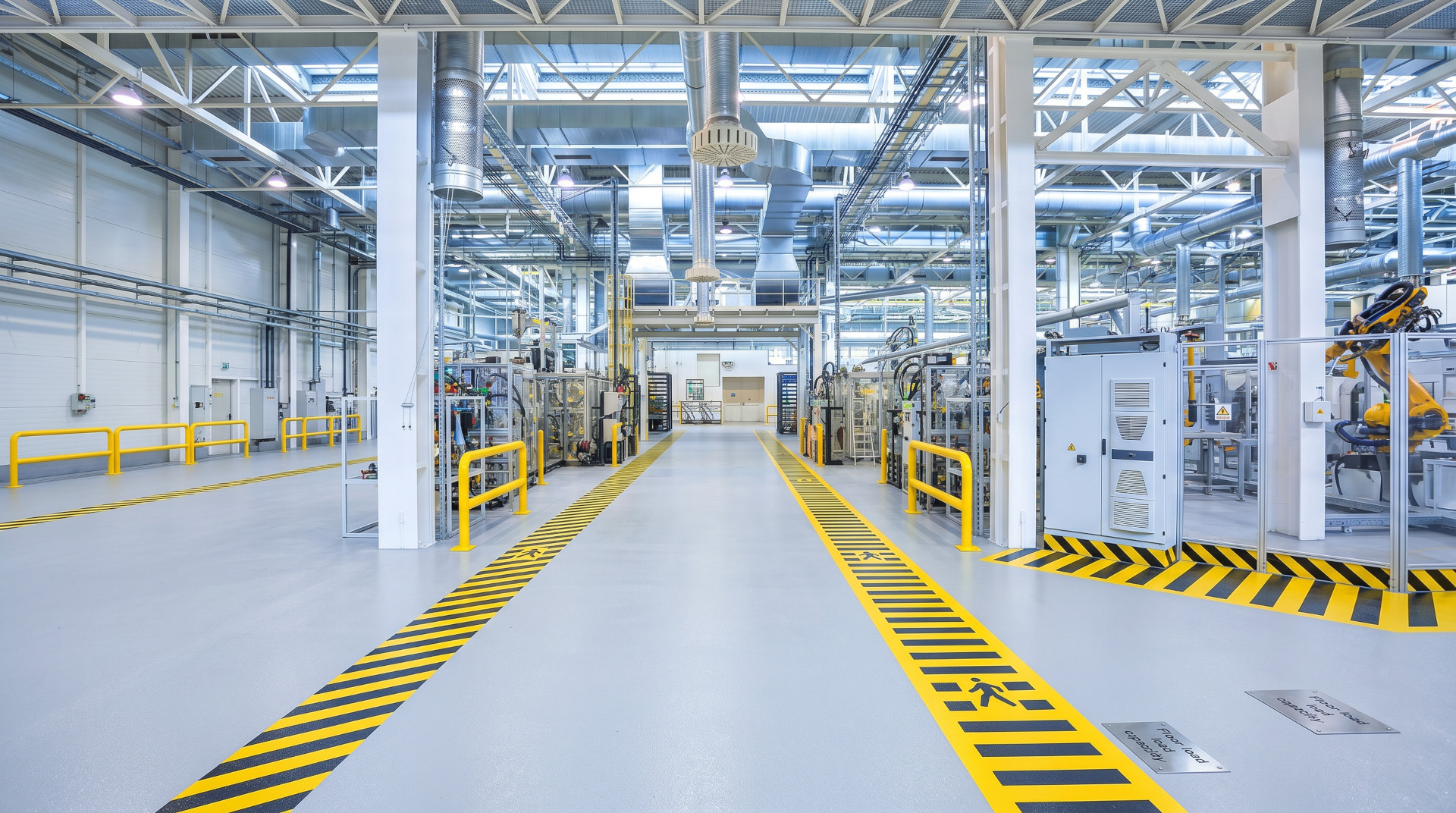
Workplace safety is one of the highest priorities for any industrial or commercial business. Whether operating a warehouse, manufacturing facility, engineering workshop, food processing plant or commercial kitchen, every employer has a responsibility to provide employees, contractors and visitors with a safe working environment. One of the most common causes of workplace injuries is slips, trips and falls, many of which occur because of unsuitable or poorly maintained flooring.
Concrete floors exposed to water, oils, chemicals, dust and constant traffic can quickly become slippery, particularly in busy operational areas. Even a small amount of moisture or oil can significantly reduce traction, increasing the likelihood of accidents that lead to injuries, lost productivity, insurance claims and costly downtime. Anti-slip epoxy flooring provides a durable, long-term solution by combining the strength of industrial epoxy flooring with specialised slip-resistant finishes that improve traction without compromising durability or ease of maintenance.
For businesses looking to reduce workplace risks while protecting their facilities, professionally installed anti-slip epoxy flooring is an investment that delivers lasting operational, financial and safety benefits.
Why Slippery Floors Are a Serious Business Risk
Many industrial and commercial facilities operate in environments where liquids, oils, chemicals or dust are part of normal daily operations. Manufacturing plants regularly use lubricants and coolants, food processing facilities require frequent washdowns, warehouses experience changing weather conditions around loading bays, while engineering workshops often deal with oils and hydraulic fluids.
When these substances accumulate on untreated concrete, the floor becomes hazardous. Uneven or damaged concrete can make matters even worse by creating trip hazards alongside slippery surfaces. A single workplace accident can result in employee injuries, production delays, workers’ compensation claims, equipment damage and potential legal liability.
By installing anti-slip epoxy flooring, businesses proactively reduce these risks while creating a safer working environment for everyone using the facility.
What is Anti-Slip Epoxy Flooring?
Anti-slip epoxy flooring is a specialised industrial flooring system that incorporates aggregates or textured finishes into the epoxy coating to increase grip underfoot. Unlike standard concrete or smooth painted floors, anti-slip epoxy creates a textured surface that provides improved traction in both dry and wet conditions.
The level of slip resistance can be tailored to suit the operational requirements of each facility. Areas exposed to frequent moisture, oils or heavy pedestrian traffic may require a more aggressive anti-slip profile, while areas requiring easy movement of wheeled equipment can utilise a finer texture that balances safety with operational efficiency.
The result is a flooring system that combines outstanding durability with significantly improved workplace safety.
How Anti-Slip Epoxy Flooring Works
Professional epoxy flooring contractors use specially selected anti-slip aggregates that become permanently embedded within the epoxy resin. These aggregates create microscopic high points that increase friction between footwear and the floor surface, reducing the likelihood of slipping even when contaminants are present.
Unlike temporary anti-slip tapes or painted coatings that wear away over time, anti-slip epoxy flooring forms an integral part of the flooring system itself. The textured finish remains effective despite continuous pedestrian traffic, forklift movement and regular cleaning procedures.
Suitable for a Wide Range of Industries
Virtually every industrial or commercial business can benefit from anti-slip flooring, particularly where safety is a priority.
- Warehouses and distribution centres
- Manufacturing facilities
- Engineering workshops
- Automotive workshops
- Food processing plants
- Commercial kitchens
- Pharmaceutical facilities
- Laboratories
- Cold storage facilities
- Breweries and beverage manufacturers
- Retail back-of-house operations
- Loading docks and dispatch areas
- Parking garages
- Aircraft maintenance hangars
Each of these environments presents unique slip hazards, making professionally designed flooring systems essential for maintaining safe operations.
Reducing Workplace Injuries
Slips and falls remain one of the leading causes of workplace injuries across many industries. While safety training and good housekeeping play an important role, flooring is often the first line of defence against accidents.
Anti-slip epoxy flooring significantly improves footing for employees carrying loads, operating equipment or working in wet environments. By reducing the likelihood of slips, businesses help protect their workforce while minimising disruptions caused by accidents and injury investigations.
A safer workplace also contributes to improved employee confidence and morale, allowing staff to focus on productivity rather than potential hazards beneath their feet.
Excellent Chemical and Wear Resistance
Industrial flooring must do more than simply provide traction. It also needs to withstand constant exposure to chemicals, oils, fuels, cleaning agents and mechanical wear.
Anti-slip epoxy flooring delivers excellent resistance to abrasion, impacts and many industrial chemicals while protecting the underlying concrete from deterioration. This combination of durability and safety makes it one of the most cost-effective flooring solutions available for demanding operational environments.
Easy to Clean Without Losing Performance
Some business owners assume that textured flooring is difficult to clean. Modern anti-slip epoxy flooring systems are specifically designed to balance traction with hygiene. While providing improved grip, they remain easy to clean using standard industrial cleaning equipment.
This makes anti-slip epoxy flooring suitable for facilities where both cleanliness and safety are essential, including food production, pharmaceutical manufacturing and commercial kitchens.
Integrating Demarcation Lines and Safety Zones
Anti-slip epoxy flooring can be combined with epoxy demarcation lines to further improve workplace safety. Clearly marked pedestrian walkways, forklift routes, emergency exits, loading zones and hazardous areas help organise traffic flow and reduce interactions between vehicles and pedestrians.
Colour-coded floor markings improve navigation throughout the facility while supporting workplace safety programmes and operational efficiency.
A Long-Term Investment in Safety
Although workplace safety is often viewed as a compliance requirement, it also makes sound business sense. Preventing even one serious workplace accident can save a business substantial costs associated with medical treatment, lost productivity, equipment damage and insurance claims.
Anti-slip epoxy flooring continues delivering value every day by reducing risks while protecting the concrete beneath. Its long service life and low maintenance requirements provide an excellent return on investment compared with repeated repairs or temporary safety measures.
Choosing the Right Slip Resistance
Not every facility requires the same level of slip resistance. The ideal flooring system depends on the operating environment, cleaning procedures, types of contaminants present and vehicle traffic.
Professional flooring contractors assess each application individually to recommend the appropriate anti-slip profile. A warehouse loading bay may require different characteristics from a pharmaceutical laboratory or food production facility. Selecting the correct system ensures the floor performs optimally without affecting day-to-day operations.
Partner with Experienced Industrial Flooring Specialists
The effectiveness of anti-slip epoxy flooring depends on proper surface preparation, product selection and professional installation. At Jumbo Flooring, we design flooring systems specifically for the operational requirements of industrial and commercial facilities throughout South Africa.
Whether you require anti-slip flooring for a warehouse, factory, workshop, food processing plant or logistics facility, we install durable epoxy flooring systems that improve safety, protect your concrete investment and support long-term operational performance.
Frequently Asked Questions
- How does anti-slip epoxy flooring reduce workplace accidents?
It improves grip underfoot by incorporating specialised aggregates into the epoxy surface, reducing the risk of slips in wet, oily or high-traffic areas. - Can anti-slip epoxy flooring handle forklift traffic?
Yes. Industrial anti-slip epoxy systems are designed to withstand heavy forklift traffic while maintaining excellent traction and durability. - Is anti-slip epoxy flooring suitable for food processing facilities?
Yes. Hygienic anti-slip epoxy systems are commonly used in food manufacturing because they combine slip resistance with easy cleaning and excellent chemical resistance. - Will textured epoxy flooring be difficult to clean?
No. Modern anti-slip flooring systems are designed to provide increased grip while remaining easy to clean using standard industrial cleaning methods. - Can anti-slip flooring include coloured safety markings?
Yes. Epoxy demarcation lines, pedestrian walkways, forklift lanes and safety zones can all be incorporated into the flooring system to improve workplace organisation and compliance.